Current condition
Identify the casting, inspected face and region on a drawing. Label the observed feature, its permitted location, size or appearance, the sample condition and the person who approves the acceptance boundary.
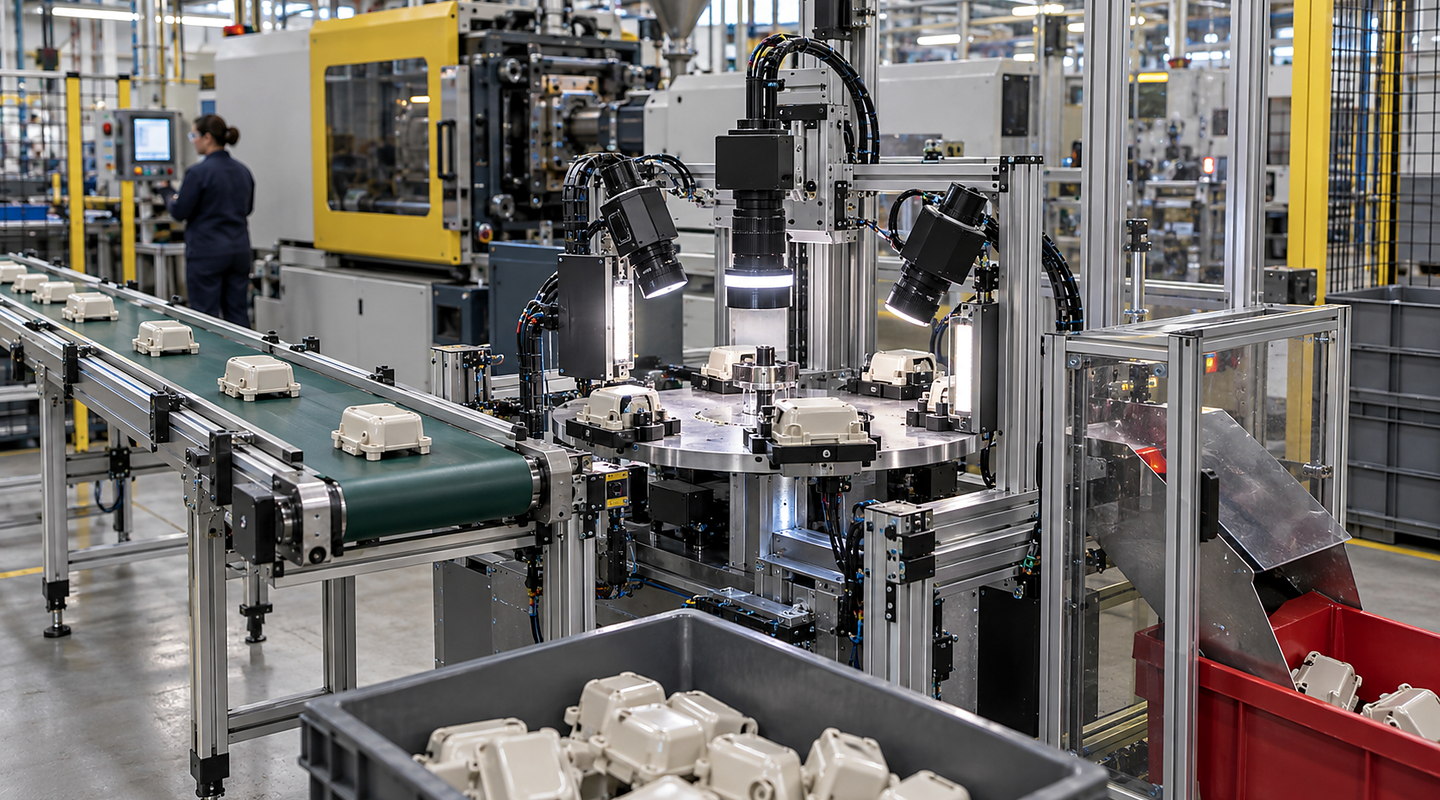
Define visible casting defects using labelled good, bad and marginal parts. Record inspected surfaces, acceptance boundaries and limits of camera coverage.
Photographs illustrate general machine-vision inspection. Casting suitability must be assessed using representative castings, defined visible defects and the actual presentation.
A visible casting defect is an exposed feature that falls outside the agreed acceptance boundary and can be distinguished from acceptable surface variation in the proposed camera views. A visible mark is not automatically a reject: use labelled good, bad and marginal castings to define the decision.
Mark the inspection region and smallest feature of concern on the drawing. Follow the optical trial sequence and agree the challenge-test record; hidden or functional requirements need their own test method.
Plan visible casting defect inspection around representative good, bad and marginal samples, line presentation, lighting, reject handling and challenge criteria. Discuss an optical feasibility trial with Oxford Vision Systems. Use this guide to resolve visible defect or measurement definition for visible casting-defect inspection before it limits the final system.
Discuss your application

Identify the casting, inspected face and region on a drawing. Label the observed feature, its permitted location, size or appearance, the sample condition and the person who approves the acceptance boundary.
Include good castings from normal batches and finishing conditions, defective examples and marginal cases. Record acceptable changes in texture, colour and residue so the trial does not confuse production variation with a defect.
Show whether each required feature is visible with the proposed access, part location and lighting. Keep recesses, shadowed areas, excluded faces and uncertain results as open requirements; a camera result is not whole-casting approval.
Define each visible reject condition using labelled examples and the drawing region. Agree the acceptable boundary and who approves it before adjusting the inspection.
Keep normal good parts, known rejects and marginal castings distinct. Identify supplier or batch, finishing state, texture, colour and residue where they affect the visible decision.
Record the datum, orientation and support points. Trial the least repeatable presentation and timing expected on the line, including normal casting tolerances.
Compare good and defective regions under the proposed camera access and lighting. Establish that the required feature is observable before evaluating classification.
Keep the result with the correct casting through reject, rework or review. Include missing parts, unexpected variants and interrupted cycles in the agreed control sequence.
Use further representative parts after development. Record missed defects separately from rejected good castings, with demonstrated coverage and unresolved cases.