Current condition
Retain each sample identity, casting variant, inspected region, approved classification, surface condition, presentation, lighting and active recipe with its observed result.
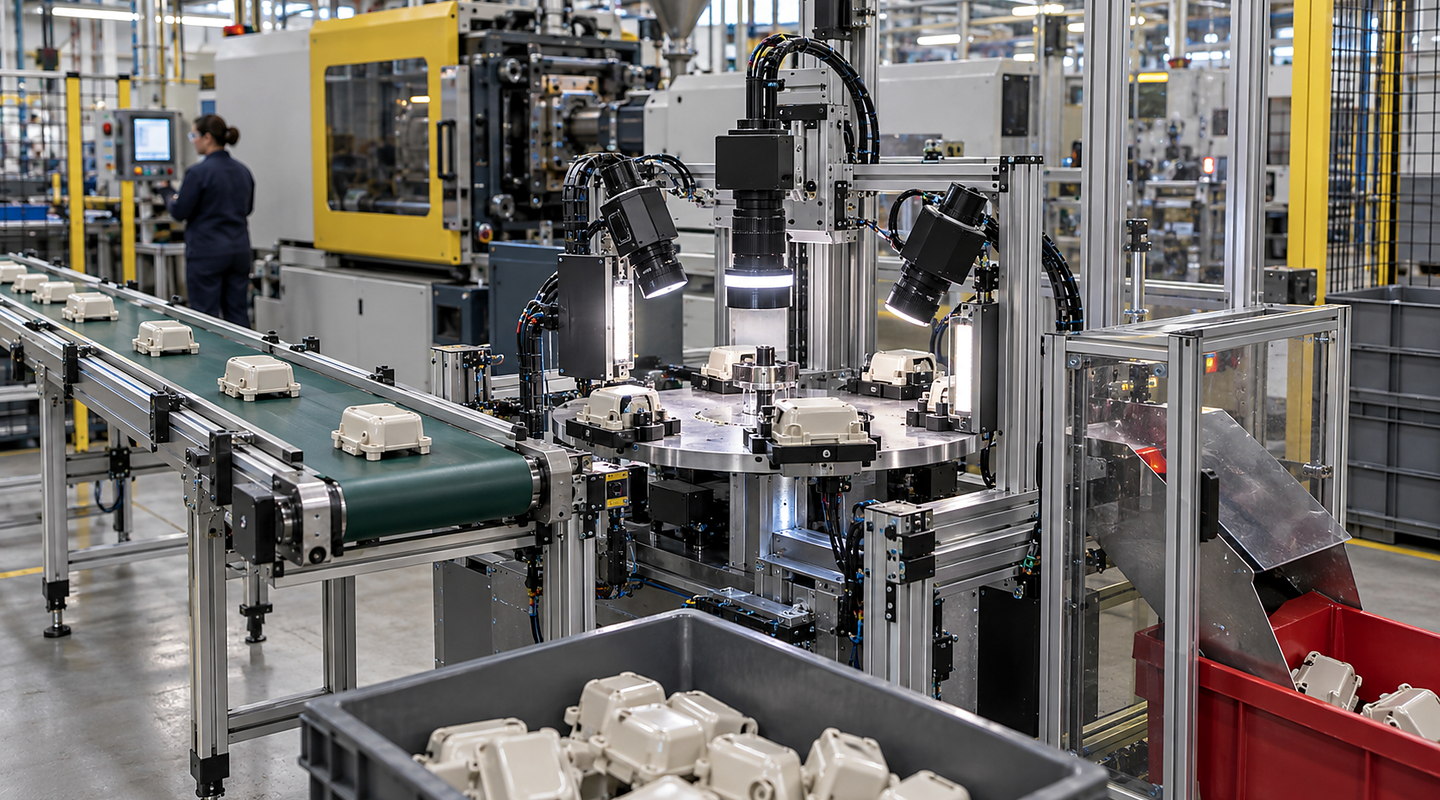
Agree casting inspection challenge samples, visible coverage, false accepts, false rejects and part-linked reject or review records before acceptance.
Photographs illustrate general machine-vision inspection. Casting suitability must be assessed using representative castings, defined visible defects and the actual presentation.
Agree the inspected regions, visible reject definitions and sample acceptance boundaries before testing. Use good, defective and marginal castings, then challenge further representative parts after development. Record missed defects and rejected good parts separately, and keep each inspection result with the correct casting.
Start with the visible-defect definition and sample study and reproduce the production inspection sequence. Record excluded faces and hidden or functional requirements separately from the camera trial.
Plan visible casting defect inspection around representative good, bad and marginal samples, line presentation, lighting, reject handling and challenge criteria. Discuss an optical feasibility trial with Oxford Vision Systems. Use this guide to resolve false-accept, false-reject and challenge criteria before it limits the final system.
Discuss your application

Retain each sample identity, casting variant, inspected region, approved classification, surface condition, presentation, lighting and active recipe with its observed result.
Include normal batches and finishing conditions, marginal visible features and the least repeatable presentation expected on the line. Use further representative samples after development; the tuning set alone is not the acceptance set.
Record the expected decision, observed decision and reject, rework or review outcome for the same casting. Separate missed defects, rejected good parts, uncertain images and any inspection face that was not demonstrated.
Approve the drawing regions, labelled visible defects and acceptance boundaries before the trial. Keep hidden, functional and other non-visual requirements in a separate test scope.
Identify good, defective and marginal samples from representative production. Keep the development set separate from the further samples used to challenge the adjusted inspection.
Reproduce the agreed datum, orientation, support and production timing. Include the least repeatable presentation within normal casting tolerances.
Retain the camera view and lighting conditions for each demonstrated region. Record shadows, recesses, inaccessible faces and uncertain images without treating them as passed checks.
Demonstrate how the result reaches the correct reject, rework or review position. Include missing parts, an unexpected variant and interrupted cycles, then record the agreed handling and recovery.
Record expected and observed decisions together. Review missed defects and rejected good castings separately, identify unresolved cases and retain the demonstrated scope before acceptance.